What Range Permits
There is information that only arrives when you are close, and information that only arrives when you are far away. A bird drawn at five metres gives you the silhouette cleanly — the mass, the posture, the way weight falls through the legs — but the bill tip is a guess and the eye is a dark suggestion. Draw the same bird at arm's length and the culmen ridge is precise, the rictal bristles count for something, but the animal is cropped to a portrait and the body's relationship to the ground has vanished entirely. Neither distance is wrong. Both are a record of a transaction, and the transaction always shows.
Artists who work seriously from life learn to read their own drawings for range. The fast structural note made at distance — legs, spine, the angle of the head — has a particular confidence because the whole animal fitted in the visual field at once. The close study has a different quality: painstaking in the parts, often slightly stiff, because the animal filled the view and the artist was piecing together a whole from adjacencies. Both kinds of mark are useful; mistaking one for the other is where paintings go wrong.
The Foreshortening Problem
Working close means working with foreshortening, and foreshortening from life is very different from foreshortening from a photograph. At arm's length, the eye continuously corrects: depth is felt in three dimensions, and the artist moves the head, leans, resets the angle. A photograph flattens the correction away. The result is that close-up photographic reference consistently makes an animal's near leg too large and its body too compressed — the painter has copied what the lens recorded rather than what the spatial relationship actually was. An artist who measured from life at close range will have built in the correction intuitively.
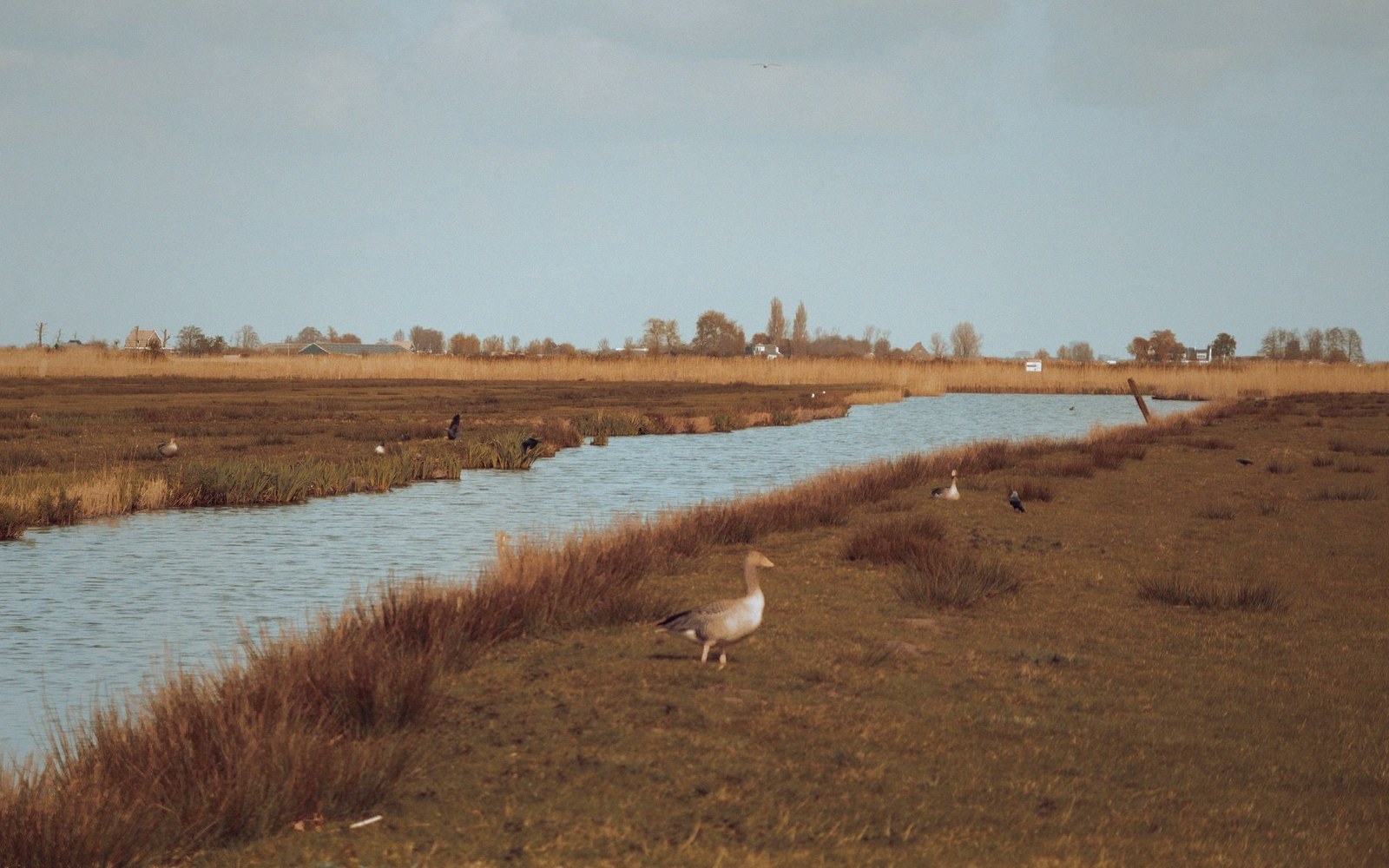
Distance also carries its own distortions. An animal drawn at forty metres forces the artist to work from a subtended angle so small that proportions become hard to fix. Long-distance studies tend to read as silhouettes even when they have been carefully worked, because the tonal range the artist could actually see was narrow. Bruno Liljefors understood this as a compositional fact rather than a limitation: his sea eagles come from a distance at which the bird is part of weather and terrain, not a specimen in front of sky, and the paintings carry that distance in their very paint quality — loose, atmospheric, subordinating detail to envelope.
The clearest sign of working distance in a finished picture is not any single mark but the implied position of the eye.
The Artist's Implied Position
The clearest sign of working distance in a finished picture is not any single mark but the implied position of the eye. A viewer standing in front of a painting can often feel whether the artist was above, level or below the animal, close enough to read individual feathers or far enough that the whole posture mattered more. That implied position either coheres or it does not. When an artist has assembled a painting from multiple reference sources — one close photograph for the head, one distant sketch for the pose — the viewpoints often differ slightly and the animal never quite settles into its space.
The honest painting is one where every part of the image seems to have been seen from the same place at the same time. That is much harder to achieve than it sounds. It demands either that the artist was genuinely there, at one range, watching continuously, or that the artist understands reference well enough to discard what comes from the wrong distance. Working distance, then, is not just a practical condition. It is an argument the artist makes about how the animal was known — and the picture will always report, faithfully, whether the argument holds.