The drawing that time makes
The artist who has watched a species across many seasons carries information that does not appear in any reference source. Not the taxonomic shape of the bird or the pelage of the mammal, which can be measured from a study skin or traced from a photograph, but something harder to name: the characteristic attitude of the animal when it is at ease. The way a roosting grey heron holds its neck — not the extended S of the field guide diagram, but the collapsed hunch of genuine rest, bill tucked just so, scapulars riding up. The way a red deer hind stands on a hillside in October, facing slightly into the wind with her ears indexing something at forty-five degrees, entirely alert but not alarmed. These are behavioural facts that accumulate through sustained watching and exist nowhere else. A photograph might catch one instance; a hundred hours in the hide builds a grammar of the species.
What accumulation does
The operative word is accumulation. A single afternoon's observation produces sketches: the fast structural note, the memory pass, the gestural record of something that moved before you finished it. These are valuable. But they catch events — moments of action, arrivals and departures, the startled posture, the excited one. The hide changes what is available. When you have been still for long enough that the animals have forgotten you, what remains is the behaviour that fills the ordinary hours: preening, loafing, the subtle postural negotiations of animals in a group. This is the material that photographs systematically underrepresent, because a photographer is selecting for the peak moment, the peak light, the peak action. The camera is biased toward the interesting. The hidden observer, waiting in the dark and the cold, accumulates the unremarkable.
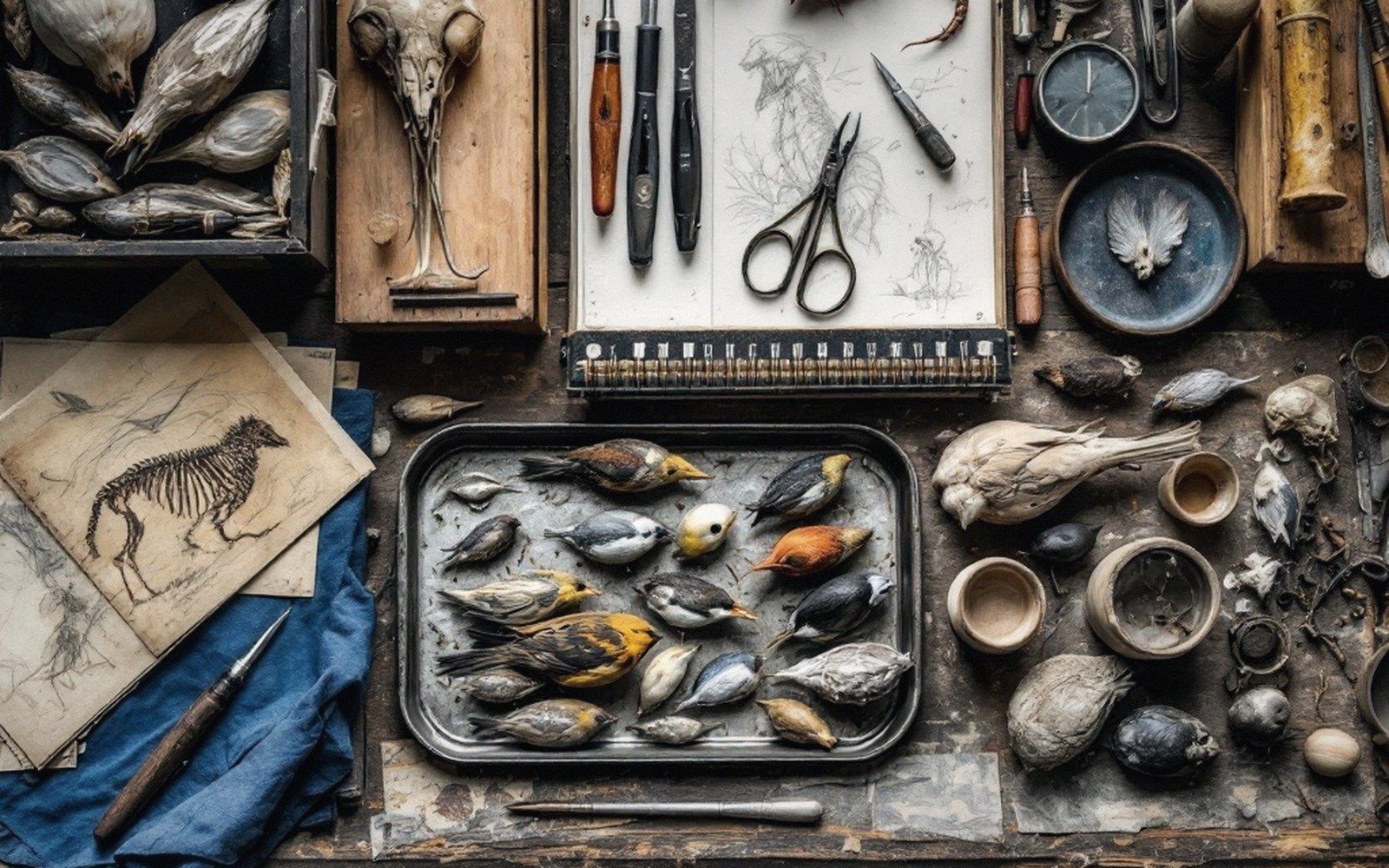
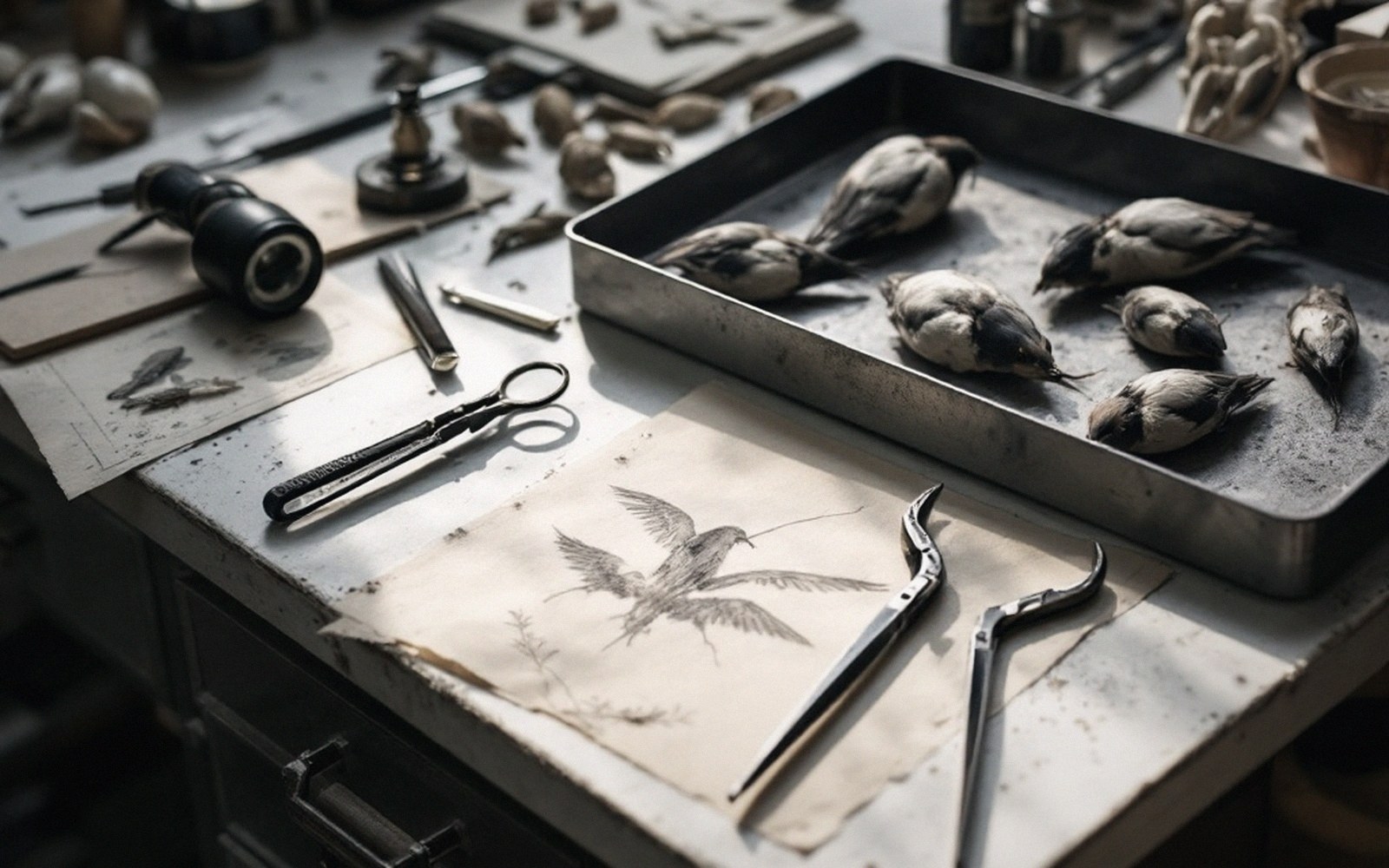
And the unremarkable is exactly what a resting animal looks like. Not the stretched neck of alarm, not the wing-spread display — the genuinely settled, metabolically quiet posture that an animal adopts when it judges itself safe. This is anatomically specific in ways that matter enormously to a drawing. Muscles that are tense in alarm are released. The spine settles. In birds, feathers are held against the body when alert and loosened when calm: the silhouette is measurably different. An artist who has not seen this, who works from photographs taken at the moment of flushing or from taxidermy mounts frozen in a single taxidermist's idea of natural posture, will draw the wrong thing competently. The image will be technically accurate — the primary feathers correctly counted, the bare-part colours correctly noted — and behaviourally false.
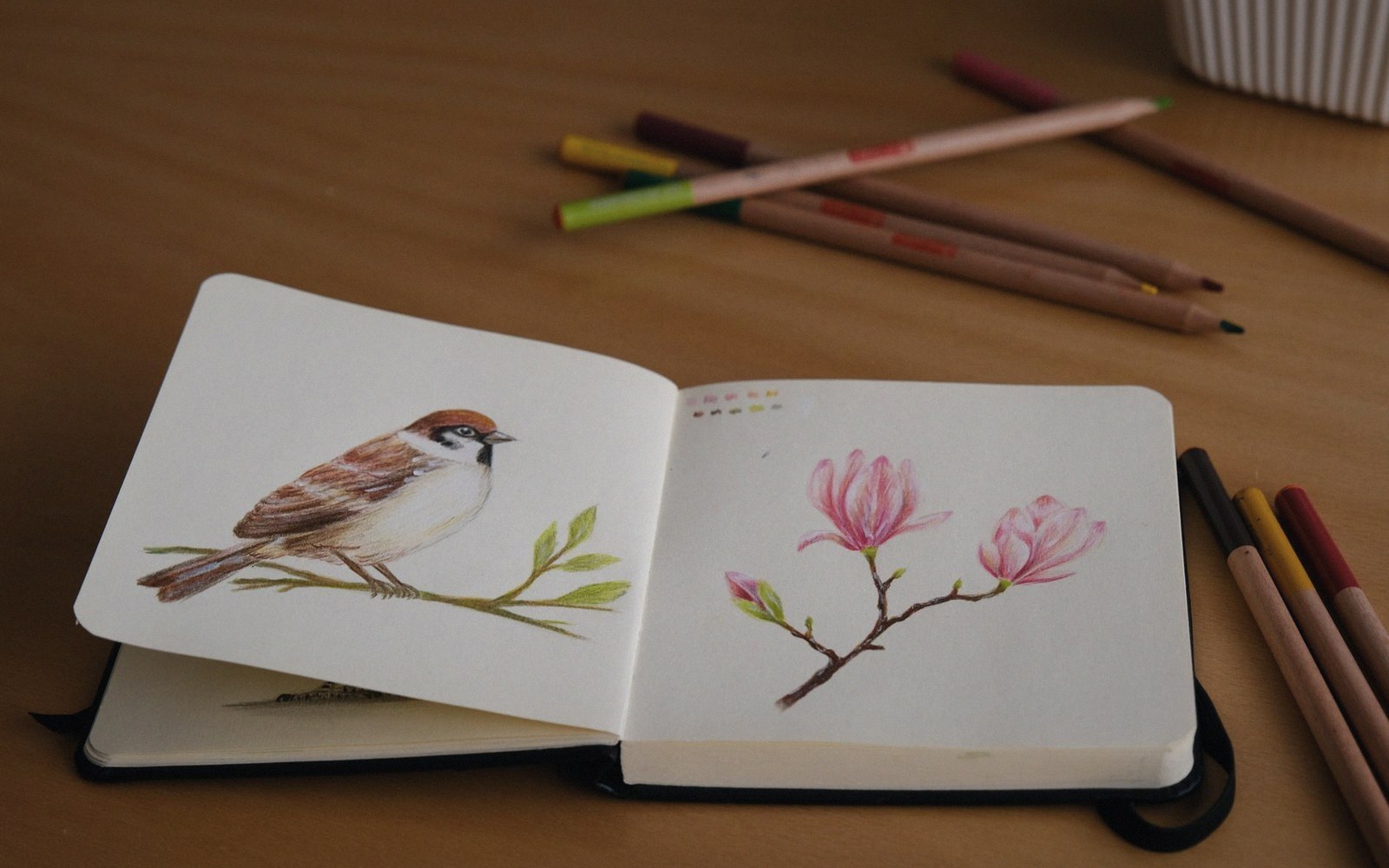
Gallery-goers feel this without being able to name it. The response is usually framed as "it looks alive" or "there's something about the eye" — and eyes do matter, because the eye goes flat within an hour of death and no photograph of a dead specimen captures the quality of a living one. But the quality of conviction in a good field-based painting is larger than the eye. It is in the weight distribution, the line of the back, the angle of the head. It is information that took years to gather, expressed in marks that take seconds to read.
The body language of not being watched
There is a specific body language to an animal that does not know it is observed, and it differs from the body language of one that does. Artists who draw habitually from life — not from specimens or photographs, but from actual animals across real time — learn this distinction in their hands before they can articulate it in words. The animal that has clocked you is in a state of evaluation: it is choosing between flight and tolerance, and its posture is organised around that choice. Every muscle that might power a takeoff or a sprint is at a slightly higher level of readiness. The eyes are fixed rather than scanning. The head is still. This is the animal that photographers most often capture, because it is the animal that has registered the photographer's presence and is deciding what to do about it.
The animal that has not clocked you is doing something else entirely. It is reading its environment on its own terms. A curlew feeding on a mudflat is moving its bill through the substrate in a continuous probing rhythm, body tilting with each insertion, weight shifting over the feet in a way that reflects the consistency of the mud beneath it. A fox in a field is hunting by ear, sitting back on its haunches with its head tilted at the angle that optimises acoustic processing — a very specific angle, quite different from the alert sit of a fox that has heard something definite. These postures are not codified in any field guide. They are available only to the watcher who has been still long enough to see them.
The yield is something that does not transfer between artists and cannot be inherited from reference.
Bruno Liljefors understood this. His sea eagles exist in conditions of weather and distance that make identification almost secondary; what he painted was presence — the specific gravity of a large raptor doing what large raptors do when undisturbed. This is not a quality you can synthesise from photographs, however good the photographs are, because a photograph cannot give you the sequence of behaviour that tells you what position means. You understand a posture in context, and context means time.
What it costs and what it yields
The practical cost of this kind of knowledge is simply time, and time spent in conditions that are generally uncomfortable: before dawn, after dark, in hides that are wet or frozen or both, watching animals that are very often doing very little. The yield is something that does not transfer between artists and cannot be inherited from reference. It is resident in the body of the observer — in the visual memory, in the kind of drawing that field notes, as primary documents, actually preserve — and it shows in the finished work in ways that neither the artist nor the viewer can always specify.
What it shows is this: the difference between an animal drawn from knowledge of its appearance and an animal drawn from knowledge of its life. The first can be achieved, with sufficient diligence, from photographs, skins, casts and careful measurement. The second requires the animal itself, undisturbed, across enough time that its range of ordinary behaviour is understood rather than glimpsed. The artist who has that understanding draws differently — not more skilfully in any technical sense, but with a different quality of intention. The marks propose something. The posture is chosen for what it means rather than what it looked like at the shutter-moment. The animal in the picture is not caught; it is known.
That is why the best field-based paintings do not feel like observations of a particular incident. They feel like portraits of a way of being — which is exactly what they are.