What Gets Discarded on the Way to the Canvas
The pipeline from field to studio is a pipeline of editorial decisions, most of them invisible. An artist spends three hours at a marsh edge watching herons. The notebook fills with gesture lines, abandoned outlines, postures that lasted half a second, a note about the way the neck kinked before the strike. The studio painting that emerges — balanced, lit, considered — contains almost none of that. It contains a heron. The specific event, the particular morning, the accidental truth of one animal at one moment: gone.
This is not a failure. The painting is supposed to do something different. But the sketchbook page does something the painting cannot, and that is why serious collections treat them as primary documents rather than preparatory studies to be filed once the real work is done.
The notebook records what happened before the artist decided what to make of it. Every correction, every abandoned line, every scrawl that says "faster — tilts forward more" is data. The corrections are especially valuable: they show the artist catching their own first impression and revising it against the living thing in front of them. A clean study lacks this. A finished painting certainly lacks it. The sketchbook page, messy and approximate and crowded with second thoughts, is the only place where the act of looking is still legible.
What the Page Actually Contains
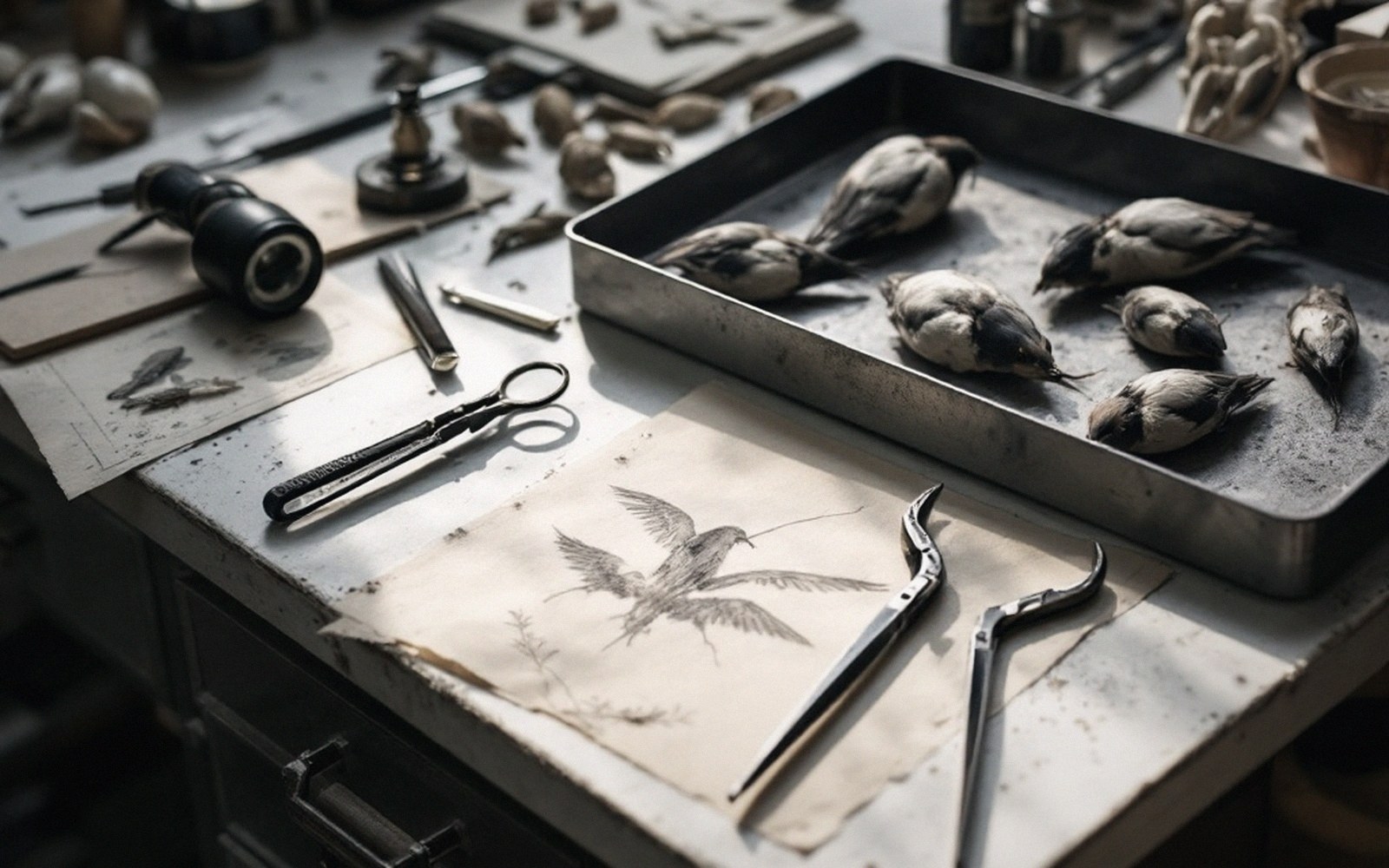
A working field page tends to carry information in layers that are not separable in any other medium. There is the structural note — a fast silhouette, usually wrong in at least one proportion, drawn in the first second before the animal moves. Then there are the revisions, made from the same observation or the next similar posture: a neck lengthened, a wing angle corrected. Then marginal notes, often terse to the point of being cryptic to anyone else ("wrist higher / not rounded / droops when relaxed"). Then sometimes a colour swatch, or an arrow indicating the direction of light.
No single element here is a painting. Together they constitute something more useful than a painting to anyone trying to understand the animal: a map of what the observer saw, what they initially got wrong, and what the animal kept doing that forced a correction. The study skin in a museum drawer can tell you the feather length; the sketchbook page can tell you what colour does not survive the living bird — the wet eye, the flushed orbital skin, the exact green of a mallard's head in direct sun, noted in pencil and a daub of gouache while the light was still right.
It simply records the encounter in the order it happened, including the parts that never resolved into anything paintable.
Collections at institutions like the Natural History Museum in London and the Smithsonian have long held artists' sketchbooks alongside specimen material, treating them as observational records with genuine scientific utility. Jemima Blackburn's Victorian field notebooks, Archibald Thorburn's working sketches, the field pages of Lars Jonsson — these are held not as curiosities but as evidence. The question they answer is always the same: what did this animal look like when it was alive and doing something?
Why the Studio Erases It
The pressures that produce a studio painting are the pressures of coherence. A painting must hold together visually. It needs a readable pose, a resolved light source, an unambiguous spatial relationship between animal and ground. Field reality rarely offers any of these: animals move, light changes, postures that are behaviourally common are compositionally awkward. The artist's job in the studio is to construct a convincing representation from gathered material, and construction involves selection and sometimes idealisation.
This is legitimate. But it means the studio painting is always an argument — a claim about what the animal is like, not a record of what it did. The sketchbook makes no such argument. It simply records the encounter in the order it happened, including the parts that never resolved into anything paintable.
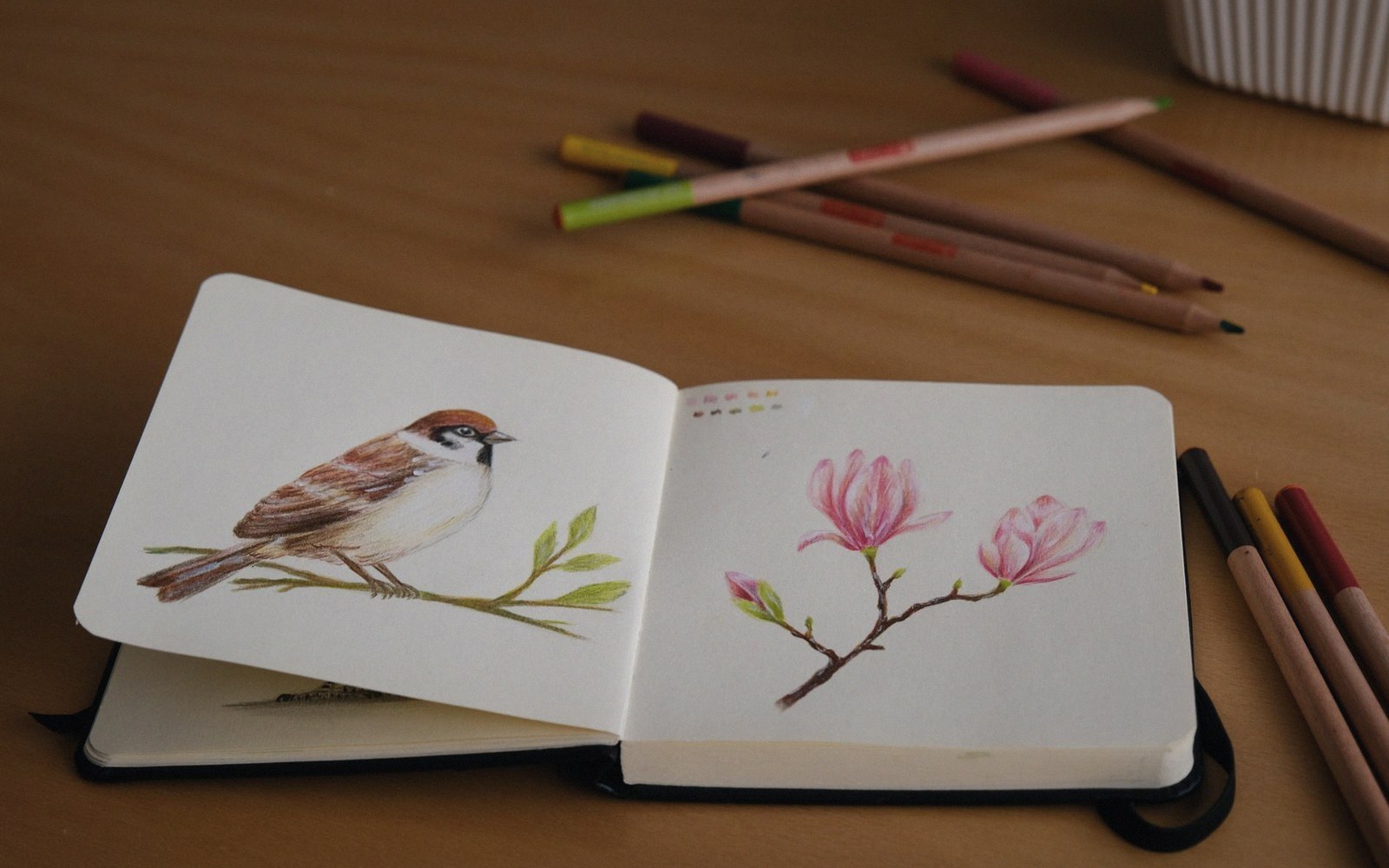
This is why a good sketchbook page can be more exciting to look at than the finished work it supposedly served. The painting shows you the artist's conclusion. The sketchbook shows you the animal resisting it — moving, changing, refusing to hold the pose long enough for anyone to get it exactly right. That resistance is the most honest thing in the room.