The Case for the Caliper
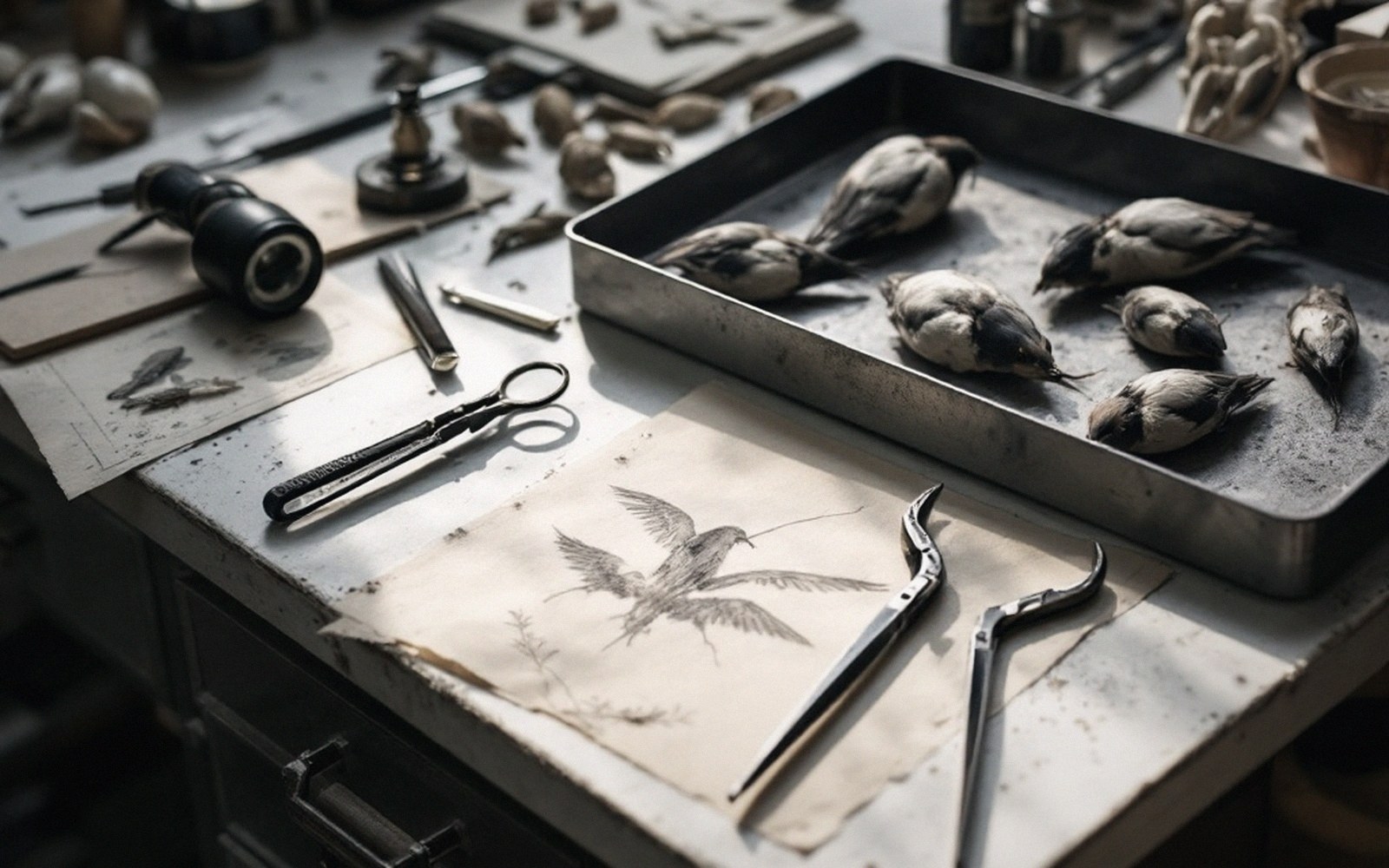
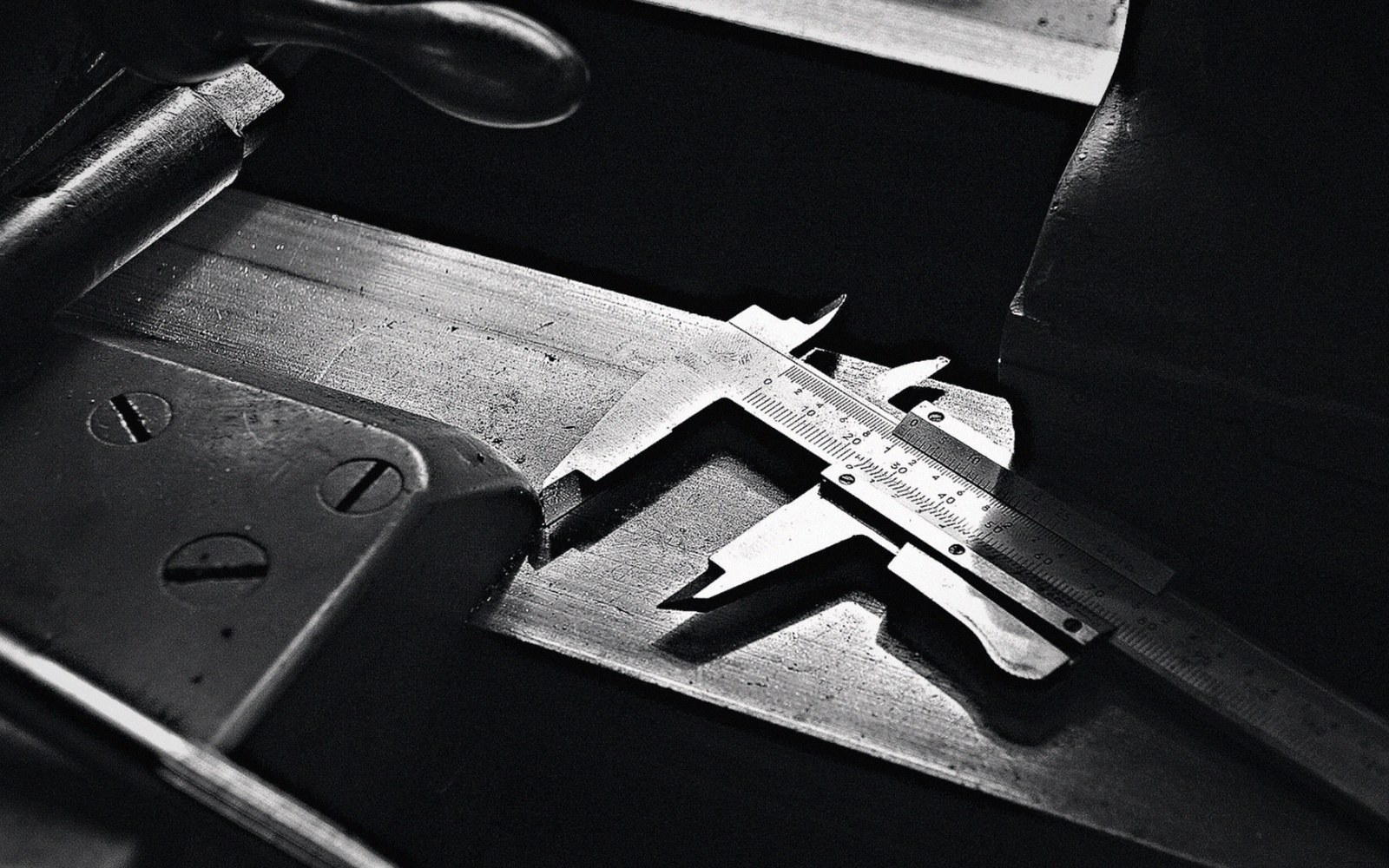
A living bird will not let you lay a ruler along its tarsus. A fish pulled from a net begins changing the moment air touches it. A mammal in the field is a blur of anxiety and speed. Death stops all of that. The specimen on the board submits to the caliper, the steel rule, the divider, and the measuring tape with perfect passivity, and that submission is genuinely valuable. Without it, the great plate-making traditions of natural history illustration — Gould's folios, the systematic monographs of the nineteenth century, the type-plates in ornithological journals — could not have achieved the dimensional fidelity that made them useful as scientific documents rather than merely decorative ones.
Measurement was not incidental to that work; it was its backbone. When a draughtsman working on a systematic monograph needed to depict two closely related species on the same plate at the same scale, the only way to make a meaningful visual comparison was to know, in millimetres, the actual wing chord, bill length from tip to feathering, culmen curve, tarsus, and toe spread. A plate that got those proportions wrong would mislead a reader making identifications in the field for decades. The calipers and the dead bird were therefore in service of something beyond mere accuracy: they were in service of scientific argument.
The discipline extended to posture. A specimen pinned and wired into a given attitude could be measured in that attitude — depth of body at the shoulder, reach from wingtip to folded primaries, height of crown above the eye — and those measurements transferred via a grid or a proportional divider to the working drawing. This is not the same as copying. It is the use of measurement as a structural armature, a set of fixed points around which the draughtsman then has to make every decision that the dead animal cannot make for them: where the light falls, what the eye looked like when it was alive, how much of the leg muscle was visible beneath the feathers when the bird carried weight on that foot.
Where the Millimetre Stops Helping

The problem with measurement is that it is a record of death geometry, and living animals do not have death geometry. A bird perched and attentive does not carry its body at the same angle as a bird arranged for a museum drawer. A mammal moving has muscles under tension that alter the visible contour of every joint. The measured specimen gives you the length of a bone; it does not give you the soft-tissue volume that surrounds it in life, the way subcutaneous fat fills out the flanks of a well-fed animal in winter, or the way skin slides over the shoulder during a stride.
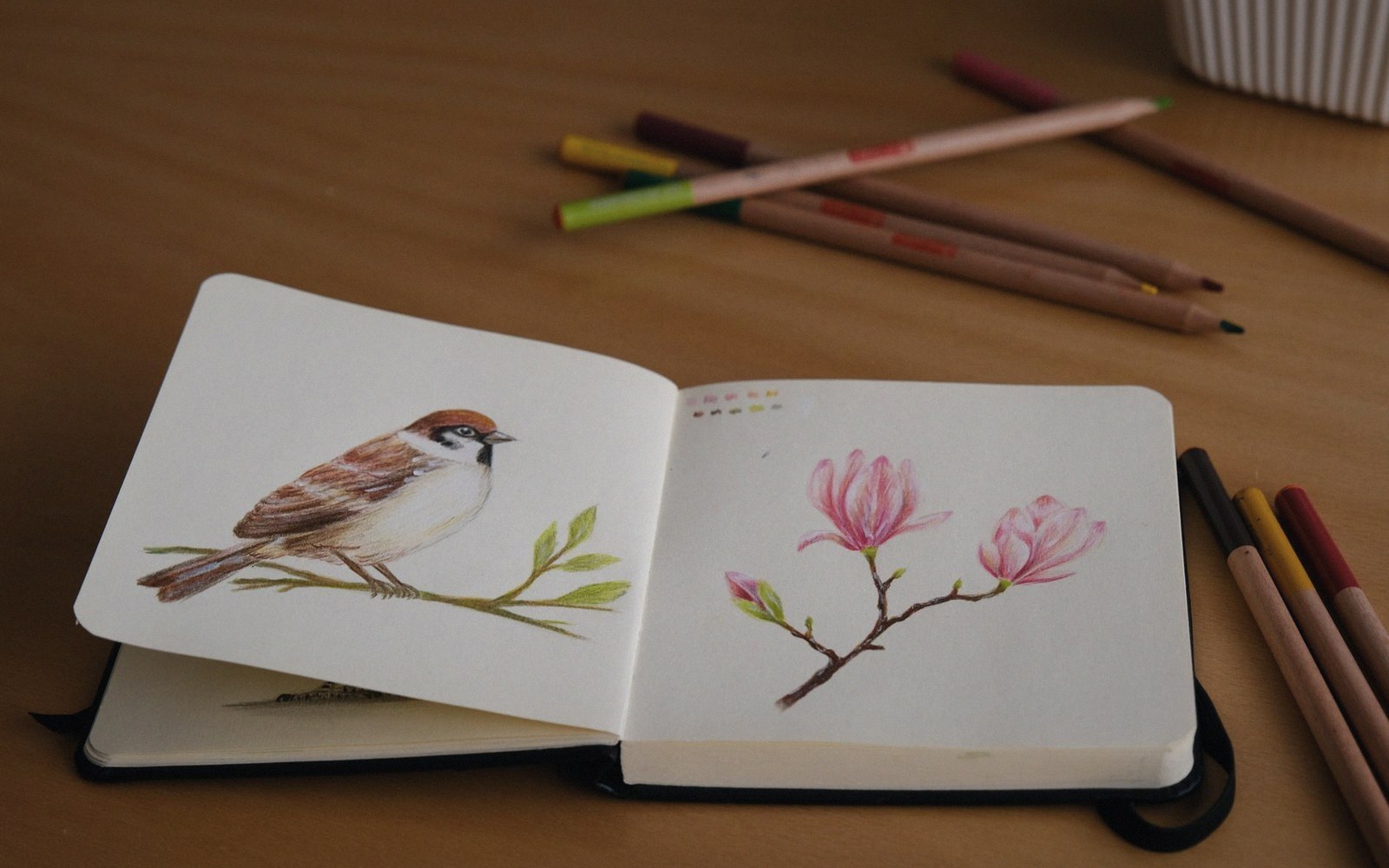
More subtly, the proportions that measurement captures are the proportions of relaxation. The neck of a dead bird is never where the neck of a living bird is. The toes of a specimen splayed on a board are not the toes of a bird gripping a branch. Illustrators who leaned too heavily on their calipers and not enough on field observation produced figures that are, in a technical sense, accurate to the millimetre and, in a visual sense, unmistakably dead. You can see this effect throughout the minor plate-making industry of the mid-nineteenth century: birds with bill lengths beyond reproach and bodies with the specific limpness of something measured rather than watched. The stretched neck is the most visible symptom of this, but it is only one expression of a larger failure.
More subtly, the proportions that measurement captures are the proportions of relaxation.
The illustrators who avoided it were those who treated measurement as a baseline, not as a description. The caliper told them the bill was twenty-two millimetres; field observation told them that the bill, when the bird opened it to sing, appeared shorter because the gape pulled the face forward. The measured wing chord told them one thing; watching the wing open into a glide told them another. Neither piece of information alone is sufficient. The plate that persuades — that makes a reader feel the animal is about to move — is the one that has absorbed the measurements and then gone past them.
The Right Tool for the Right Question
This is the appropriate frame for judging what dead-specimen measurement can and cannot do for a naturalist-illustrator. For questions of proportion, scale, and systematic comparison, it is irreplaceable. No amount of field watching will tell you the precise culmen length, and no field sketch, however fluent, will allow a reader to compare two subspecies with confidence. The specimen and the caliper answer those questions definitively.
For questions of life — how the animal holds itself, where the weight sits, what the eye looks like, what the body is doing when it is doing something — measurement is the wrong tool entirely. Those questions belong to sustained observation, to the field notes as primary document, to the slow accumulation of specific, witnessed moments. A plate built on measurements alone is an obituary. A plate built on observation alone risks being beautiful and dimensionally wrong. The plates that endure did both, and knew which one they were doing at any given moment.