One Taxidermist's Opinion About Posture
Where the Mount Lies
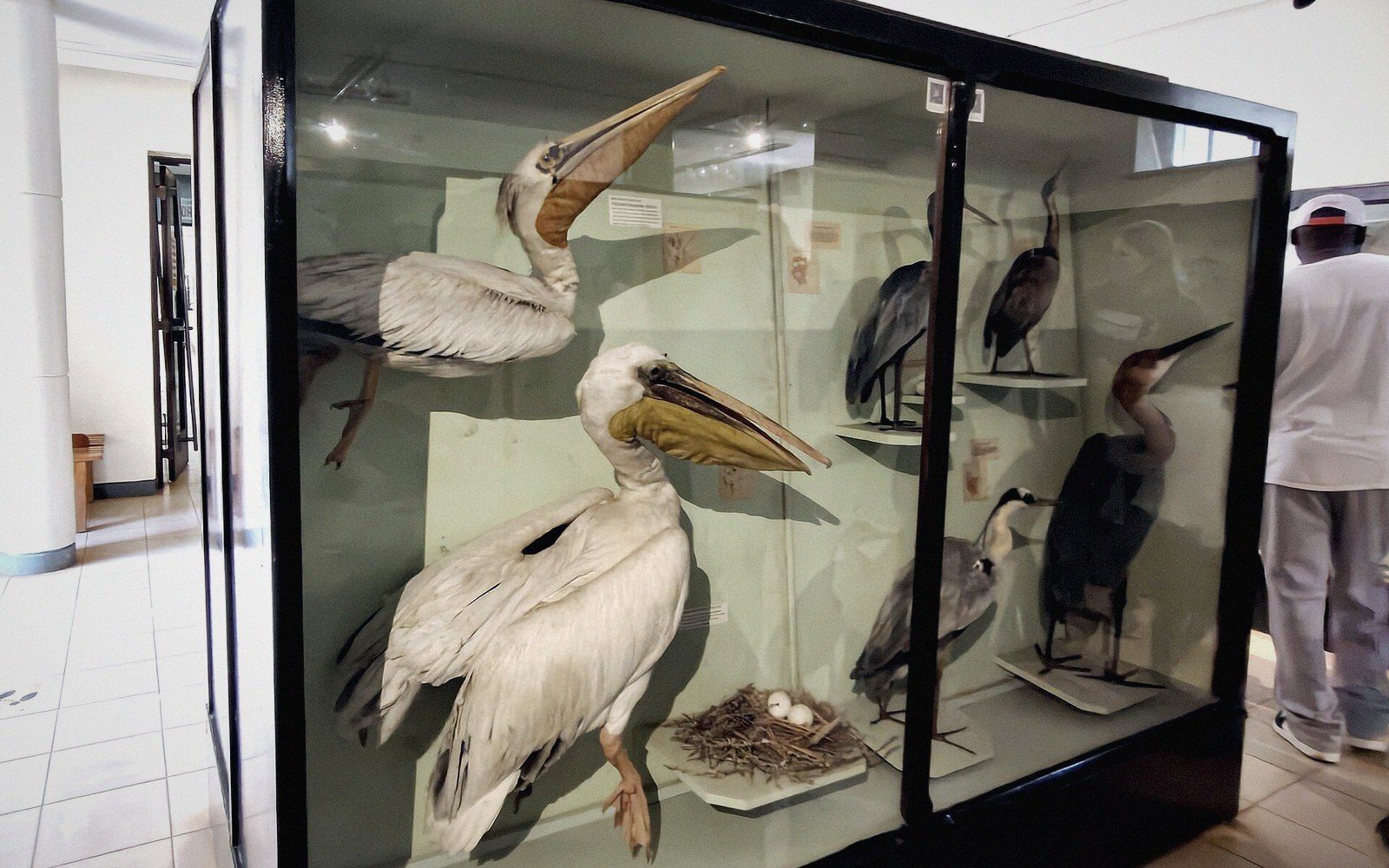
The eye is the first casualty and the most obvious to anyone who has watched a living animal closely. A glass eye is set by hand into a cavity that the taxidermist has filled and shaped — and it is almost always placed too far forward, angled too frontally, and seated too shallowly, giving it the round, exposed prominence that no healthy wild animal carries. A living bird's eye sits deep in its orbital ring, partly hooded, wet and directional; a fox's eye catches light from specific angles because the cornea curves into a socket with real depth. The mounted version stares. It solicits. Painters who copy it faithfully produce animals with the disconcerting wide-eyed affect of a soft toy.
The shoulder and neck set distort for structural reasons. A study skin gives the artist measurements; a mount gives the taxidermist a problem in three-dimensional engineering. The skin must be stretched over a pre-made form — traditionally carved wood or pressed excelsior, now usually polyurethane foam — and the join between neck and shoulder is the point where tension in the skin most easily pulls the anatomy out of true. The result, in the great majority of museum mounts, is a neck that rises too steeply and too centrally from the shoulder mass, erasing the real topography of trapezius and rhomboid that makes a mammal's neck root visually interesting. In birds, the corresponding fault is a breast that pushes too far forward, producing a heroic keel that the living bird, insulated by fluffed contour feathers, never actually projects.
Tail carriage is guesswork formalised. A taxidermist working without precise photographic reference — and for most of natural history illustration's long run, without any photographic reference at all — defaulted to a tail held clear of the body, visible, presentable. The living animal uses its tail differently depending on mood, speed and social context: a red squirrel's tail is a mood barometer and a counter-balance; a mounted squirrel's tail is a decorative flourish. A fox at rest may carry its brush low and tucked; the museum fox flourishes it. These choices look like anatomy to the copying artist. They become anatomy in the finished painting.
Muscle volume is the subtlest distortion and perhaps the most artistically damaging. A mount cannot replicate the way muscle bellies shift under skin when an animal moves, nor the transient surface tension of a creature alert rather than relaxed. The form beneath the skin is static and approximately right at best. What it removes is the hierarchy of volumes — the way a large carnivore's shoulder mass dominates everything else when the animal turns — replacing it with an even, smoothed surface that reads as sleek and generic. Painters who work from mounts tend to produce animals that are correct in silhouette and dead in volume.
The insidious thing about mount-derived errors is that they enter the visual tradition and become self-reinforcing.
What Propagates
The insidious thing about mount-derived errors is that they enter the visual tradition and become self-reinforcing. A plate published in the nineteenth century, worked from a museum mount, becomes a reference for subsequent illustrators. What was one taxidermist's compromise about eye placement becomes, through thirty iterations, the way a badger is drawn. Spotting the lineage is a useful forensic exercise: the too-frontal eye, the over-elevated neck, the tail held just so — these are signatures of a source, not observations of an animal.
This is not an argument against using mounts. A mount offers what a study skin cannot: full three-dimensional form, fur or feather direction across the whole body, the approximate relationship of parts in space. For certain problems — understanding the profile of a head, reading the tonal pattern of a coat — a good modern mount, made from extensive photographic reference by a skilled preparator, is genuinely useful. The word approximately is doing real work in that sentence. The artist who knows what a mount distorts can compensate; the one who copies it faithfully inherits every decision the taxidermist made, including the wrong ones.
The discipline is knowing which parts to trust. Measure the mount. Photograph it. Then put the skeleton under the fur in your head, and read the mount critically, the way you would read any other opinion.