What Copying Looks Like
A copied photograph announces itself in specific ways. The tonal range is compressed: dark passages sit at middle grey because the shadow detail in a JPEG rarely goes fully black, and the artist reproduces what is on screen rather than what is in the world. The focal plane asserts itself uninvited — near feathers rendered with the same crispness as distant ones, because every pixel on the monitor looks equally present. Limbs that fall outside the depth of field are either fudged or suspiciously soft, following the lens rather than anatomy. Perhaps most telling: the animal's weight is absent. Gravity is not recorded by a shutter; the relationship between mass and ground — the compression of a pad, the sag of a belly — must be understood rather than transcribed.
The eye in a copied photograph is frequently flat and glassy, the wrong kind of wet, because the artist has painted reflected highlights without understanding what the living eye is actually doing: gathering, reflecting a whole hemisphere of light, sitting in a socket that gives it three-dimensional context no lens fully captures.
What Reading Looks Like
An artist who reads photographs uses them the way an engineer reads a survey map — for data, not for appearance. The photograph answers specific questions: how does the carpal joint sit at this stage of the wingbeat? How much of the tarsus is feathered? What direction does the flank striping actually run? Those answers feed a picture built from anatomical understanding, observed mass, and known behaviour — not from the photograph's particular arrangement of pixels.
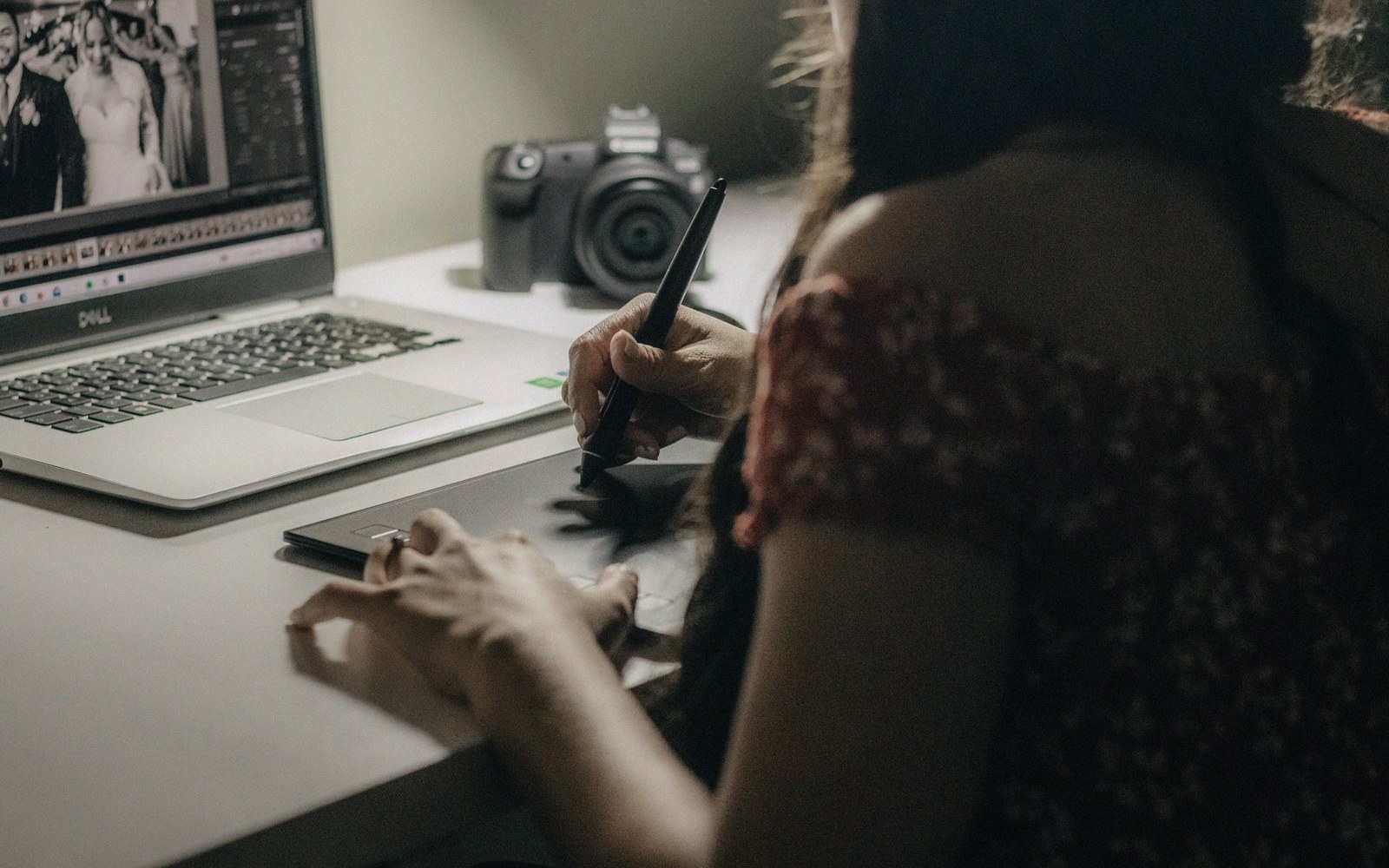
This means the photograph may be already flat, already chosen by the lens before the artist arrives, but the artist refuses that inheritance. They adjust the tonal architecture deliberately. They reconstruct the focus falloff from knowledge rather than accepting the lens's opinion. They treat the camera as a field notebook that caught one moment — useful, partial, never sufficient.
Together they build the knowledge that makes the image on the screen into raw material rather than a blueprint.
The quality of reference also matters enormously. A blurred action shot of a hunting raptor is almost useless as a surface but tremendously useful as a record of attitude — the angle of attack, the tucked leading leg, the rotation of the head. The artist who can read it extracts the attitude and constructs the surface from everything else they know. The artist who copies it produces a blurred raptor and calls it energetic.
The Discipline in Practice
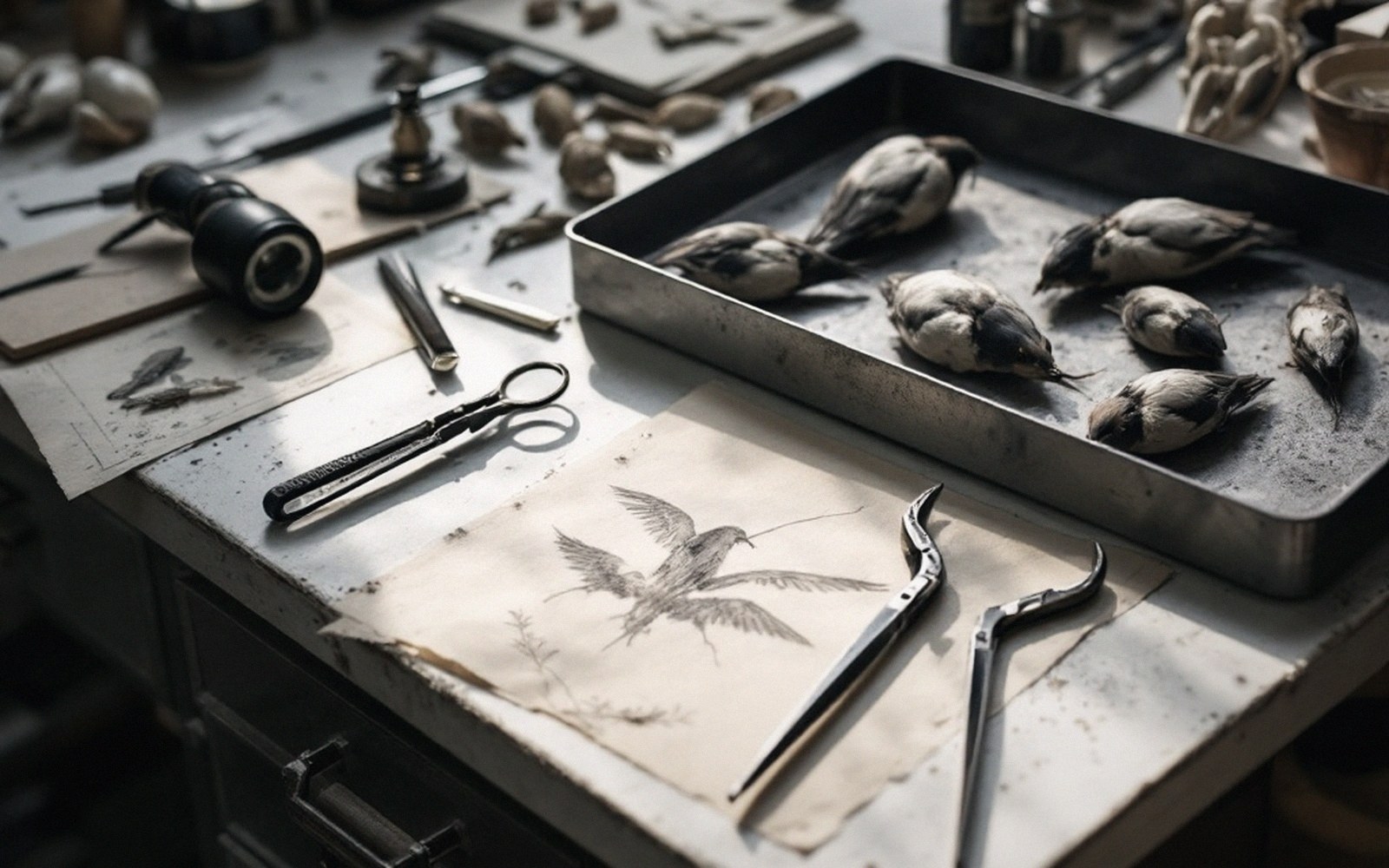
What separates the two approaches is not talent but preparedness: the body of knowledge the artist brings to the photograph before looking at it. Skeletal structure, the direction feather tracts run, how a given species distributes weight between its toes — all of this must precede the reference session, not grow from it. The photograph confirms, contradicts, or surprises; it does not teach from scratch.
This is why sustained observation in the field, drawings made under time pressure from living animals, and the study of specimens each contribute something the photograph cannot supply. None replaces the others. Together they build the knowledge that makes the image on the screen into raw material rather than a blueprint.
The finished painting gives the game away either way. Volume, weight, the specific quality of light on a surface understood from inside — these cannot be borrowed from a file. They are earned in advance.