The Shape No Eye Has Ever Seen
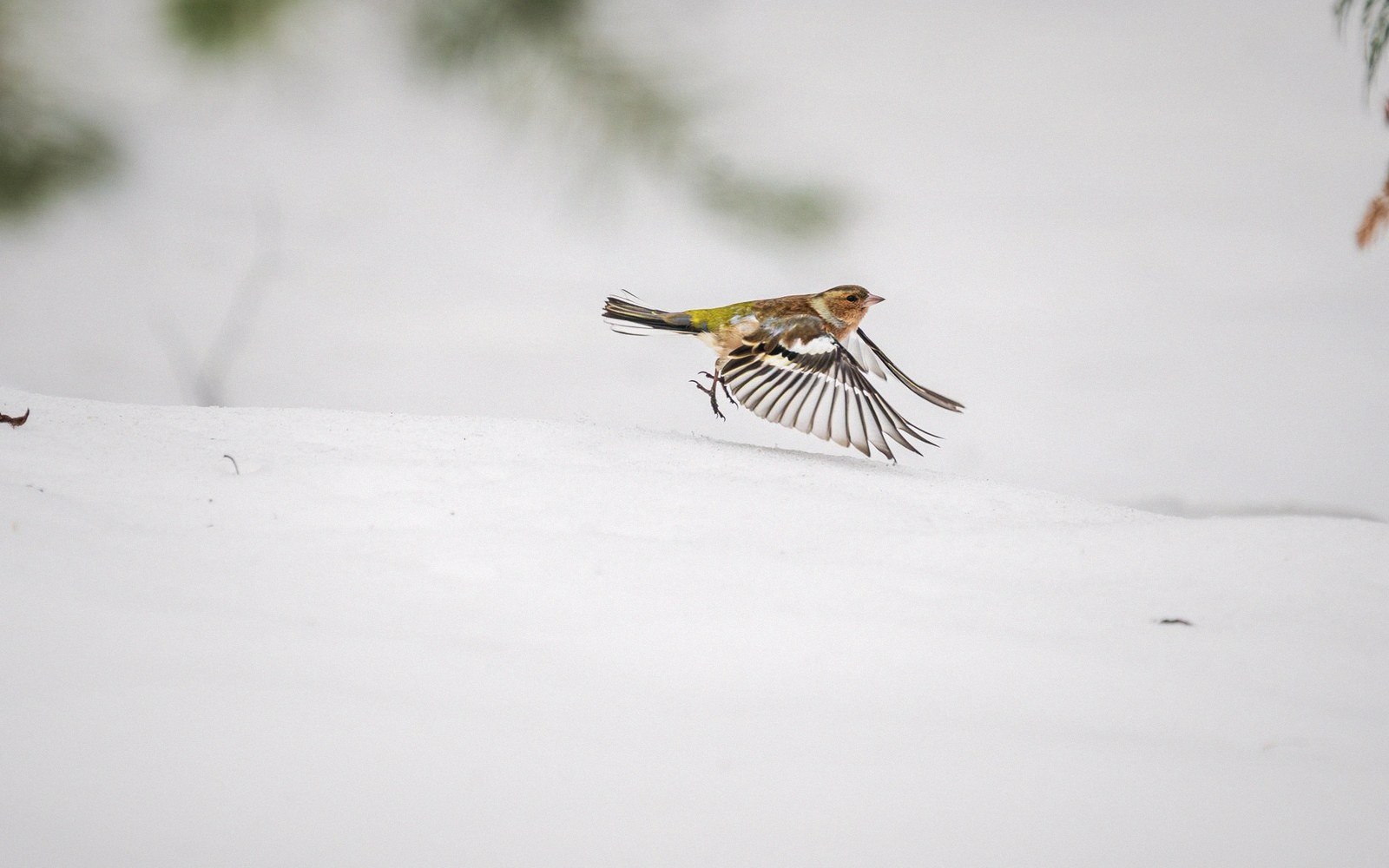
Hold a hummingbird in mind. You know what its wings look like when it hovers: a blur, a vibration, a smear of iridescence that the eye converts into an impression of motion rather than a resolved form. That blur is the honest visual truth — it is what seeing a hummingbird actually is. Now look at a high-speed photograph: two wings, frozen mid-stroke, spread and sharp, every primary feather individually legible, the leading edge and the trailing edge each a clean line. It is a revelation. It is also, in any experiential sense, a fiction. No eye has ever seen it. The retina integrates over time; a thousandth of a second is far below the threshold at which neural processing can distinguish separate moments. What high-speed photography delivers is real, in that it faithfully describes physical reality at one instant — but it is not what seeing is, and when that frozen shape enters painting, it carries a whole set of consequences that wildlife artists have been arguing about, mostly without quite naming the argument, for fifty years.
The argument is really about evidence and authority: which source is truer, the accumulated visual experience of watching a bird move, or the machine record of a single instant that no observer registered at the time? Both are evidence. They are evidence for different things. The trouble starts when one is used to adjudicate the other.
What Was There Before

Before high-speed photography became a working tool for illustrators and painters — which is to say, before the 1970s brought affordable motor-drive cameras and 1980s technology sharpened the results further — the wing in flight was depicted from memory, convention, and occasional dead-specimen examination. The conventions were not stupid. They were built from thousands of hours of watching, and they encoded motion intelligently: the wing slightly blurred at the tip where speed is greatest, the shoulder relatively resolved, the leading edge cleaner than the trailing edge, the whole form implying arc rather than arresting it. The result looked like flight because it communicated what watching flight feels like.
The painters who worked this way were not guessing. Bruno Liljefors, working in Sweden through the late nineteenth and early twentieth centuries, constructed his flying birds from sustained field observation so thorough that the structural readings are largely borne out by later photographic evidence — the wing angles are correct, the weight distribution plausible, the sense of the bird in its medium convincing. He was wrong on some specifics that only a camera could have caught. He was right about nearly everything that makes a painting feel alive. The wrongness is instructive: it is the wrongness of a skilled, attentive human observer operating at the limits of what human observation can yield, not the wrongness of inattention or convention carelessly applied.
A frozen wing is accurate evidence about the physical configuration of that wing at that instant. It is not evidence about how that configuration reads to a watching eye.
Audubon, working earlier, had the dead bird as his primary source, wired and pinned into postures that he sometimes set against naturalistic backgrounds. The four hundred and thirty-five plates of Birds of America contain flying birds that are, by any photographic standard, wrong in ways immediately visible: wing positions that no high-speed frame confirms, joint angles that mechanics rules out. And yet the plates still convince many viewers, because the force of observation in the close work — the plumage, the posture, the sense of specific character — carries the composition even where kinematics fails. The credibility is unevenly distributed, and most viewers have no vocabulary for locating where it breaks down.
When the Frozen Shape Became the Standard
What shifted, from roughly the 1980s onward, was that high-speed photography of birds in flight became both achievable for working artists and, more importantly, publishable. Reference libraries of frozen wings accumulated. Photographic field guides began to include in-flight plates derived from exactly this kind of imagery. For an illustrator working to identify a species by its flight silhouette — a practical, legitimate need — the precise frozen shape of a wing at a specific moment in the stroke cycle is genuinely useful. The science wanted precision. The precision the camera offered was real.
The consequences for painting were not always equally good. When the frozen wingshape becomes the reference a painter traces or builds from, several things follow. First, the shape is intrinsically ambiguous: a wing caught at one instant in a continuous cycle could have arrived at that position from above or below; the eye cannot read the direction without contextual cues the photograph may not supply. Painters who trace the shape without understanding the mechanics produce wings that are individually correct and collectively incoherent — you cannot tell where in the stroke the bird is, and so you cannot tell where it is going. Second, the frozen form eliminates the very quality — implied motion — that distinguishes a flying animal from a perched or dead one. The wing is sharp; the bird appears to be hanging in air with no account of how it got there or where the air resistance is.
There is also a subtler problem. High-speed imagery tends to catch the wing at the extremes of its stroke — the top of the upbeat, the bottom of the downbeat — because the bird is briefly most stationary at those moments and the image sharpest. This systematically over-represents the extreme positions and under-represents the mid-stroke positions that actually occupy most of the bird's flying time. A painter who builds a visual vocabulary from these images will tend to draw birds at their stroke extremes, which produces a kind of false drama: every bird is always at full extension or full compression, and the easy, ordinary flight of a bird crossing a meadow looks like a diagram of maximum effort.
The Argument About Right
None of this makes high-speed photographic reference wrong to use. It makes it necessary to understand what it is evidence for, and what it cannot tell you. A frozen wing is accurate evidence about the physical configuration of that wing at that instant. It is not evidence about how that configuration reads to a watching eye, how the sequence of such configurations is weighted across the stroke cycle, or what motion looks like to a nervous system that integrates time into experience.
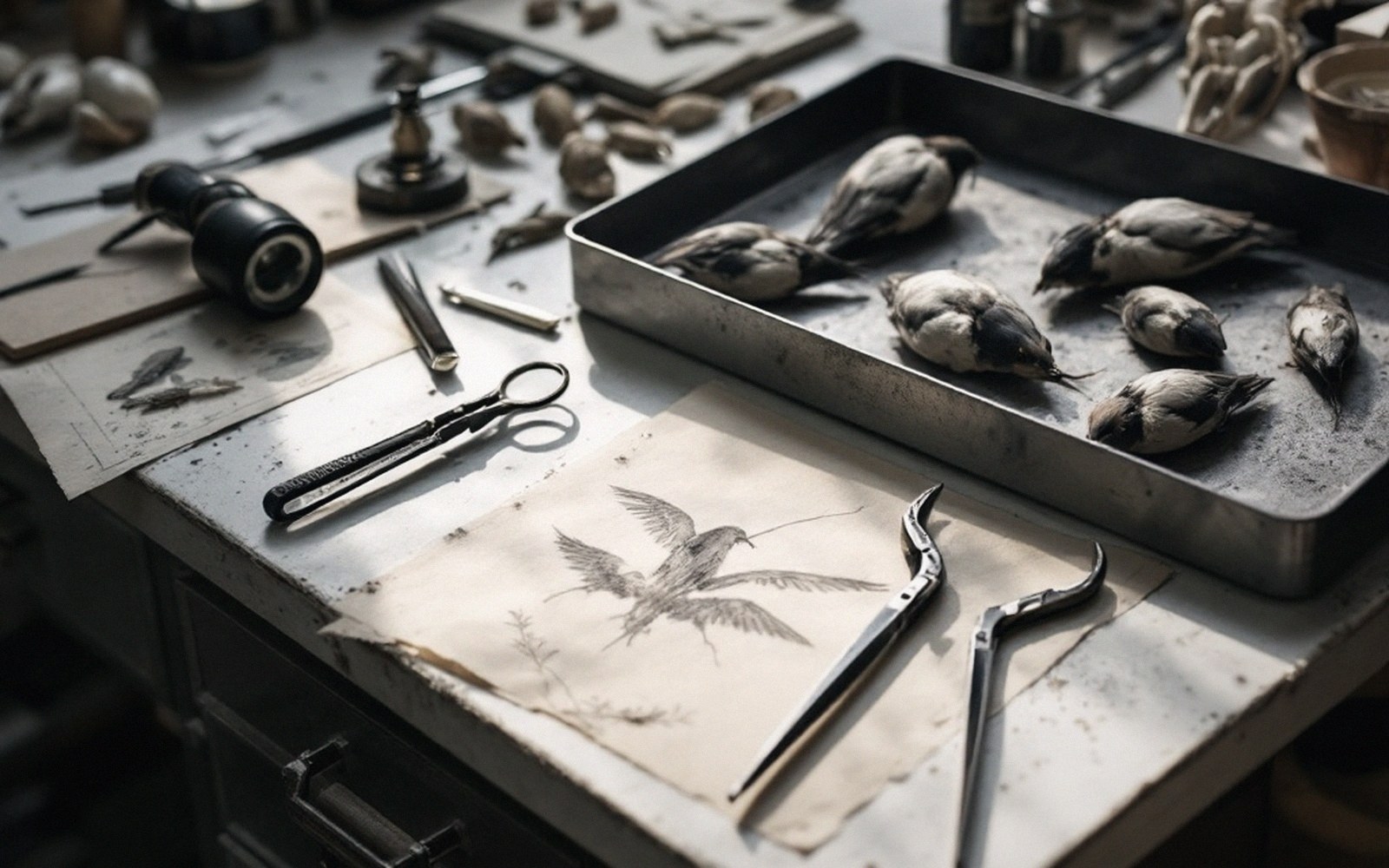
The best wildlife painters working today from photographic reference tend to use it the way a good anatomist uses a dissection: as a source of structural fact that must then be interpreted through an understanding of mechanics, mass, and the behaviour of the animal in motion. The photograph tells them where the bones are; it does not tell them how the weight moves, which is the thing that makes a body look alive. Artists who are less secure in their anatomical reading use the photograph as a template, and the template shows. The wing is impeccably documented and somehow inert.
What the argument is not about is nostalgia. The point is not that paintings before high-speed photography were better — many were structurally wrong in ways that matter — but that they were drawing on a different and in some respects richer body of evidence: the accumulated, integrated, time-weighted experience of watching animals move. That evidence produced characteristic errors (missed specifics, averaged positions) and characteristic strengths (plausible motion, readable force). High-speed photography produced different errors (frozen extremes, ambiguous direction, missing motion blur) and different strengths (structural precision, feather-by-feather accuracy in plumage, verifiable wing loading). The question for any serious painter is which errors they are willing to carry, and whether they know which kind they are carrying.
A wing stopped at a thousandth of a second is not wrong. It is precisely, objectively, verifiably the shape of that wing at that moment. What it is not, and what no shutter speed can produce, is the experience of watching the bird — the blur that tells you the wing is moving, the trailing edge that tells you which way, the weight shift at the shoulder that tells you whether the bird is climbing or settling. That information lived in the painter's eye before it lived in any camera, and the question of whether it still lives there, in the age of the motor drive and the image library, is the real argument being had.