The surface is not decoration
Both feathers and fur exist in systems. They grow from specific follicles arranged in specific tracts, they lie in determined directions, they respond to muscle and posture and weather, and they create the visible silhouette. None of this is arbitrary, and none of it is detail in the pejorative sense — something to fuss over in the final pass. It is structure, as load-bearing to a convincing animal surface as the skeleton under the fur beneath it.
Feather tracts: the map underneath the plumage
Ornithologists call them pterylae — the defined regions of the bird's skin from which feathers grow — and the bare skin between them apteria. This alternation matters to the artist because the feathers of one tract overlap those of the next, the way roof tiles do, and the direction of that overlap changes as you move across the body. On a duck's breast the feathers fan slightly outward and downward from the midline; on the same bird's flank they lie flatter and longer, pointing toward the tail; on the nape they reverse, angling forward. Follow those directions in paint and the eye reads a body turning in space. Ignore them and you have wallpaper.
The most instructive test case is the wing. A bird's wing is not uniformly feathered: primaries, secondaries, tertials, greater coverts, median coverts, lesser coverts, marginal coverts, scapulars, and alula are each distinct feather groups with different shapes, different lengths, and different angles of insertion. A convincing folded wing shows those groups as legible layers, each generation of coverts stepping down toward the leading edge. An unconvincing one shows a vaguely pointed shape with marks on it. The difference is not a matter of detail; it is a matter of comprehension.
The contour feathers of the body — the ones that make up the bird's visible surface — are themselves structured objects. Each has a shaft (rachis), barbs that interlock through barbules to create the vane, and a base of downy plumulaceous material where it meets the skin. Where feathers are abraded, or where the bird is a juvenile or in active moult, those vanes break down and the individual shafts become visible. An immature raptor in heavy moult looks genuinely different from an adult in fresh plumage — not just a different colour, but differently textured, differently lit, differently silhouetted at the wing edge. An artist who has watched birds closely knows this; an artist working from a single cleaned museum skin does not, and the painting shows it.
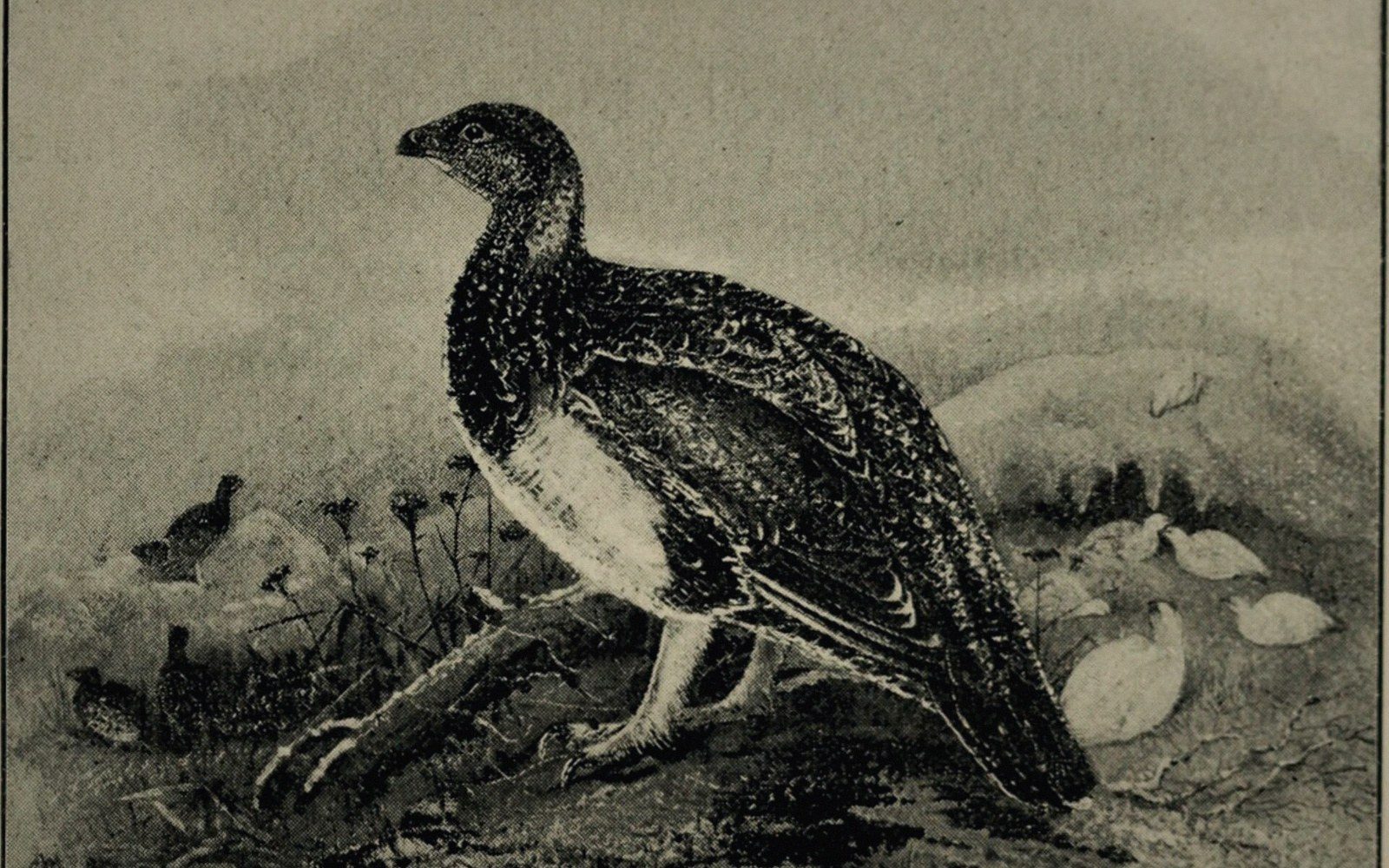
There are also the feathers that do not lie flat: the crest of a hoopoe, the hackles of a displaying grouse, the erectile plumes of a breeding egret, the semi-plumes along the flanks of a heron that lift slightly in wind. These require understanding not only where the feathers are and which direction they normally point, but what muscles and what social or environmental cues raise them. A painted heron with its scapular plumes held at exactly the same angle in every version of the pose is a heron whose artist has not stood next to a heron.
The convincing animal painting is the one in which the surface is a consequence of structure, not an addition to it.
Pelage: direction, parting, and the logic of wet fur
Fur has direction for the same reason feathers do: it grows from follicles arranged in tracts, and those follicles are angled. On most mammals the general flow is caudal — toward the tail — but this is a gross simplification. Fur swirls around joints, parts at ridges, grows forward on the chest and throat of many species, and reverses direction at whorls that are species-specific and individually variable. On a short-haired animal like a weasel or a deer, these currents are visible in good light and diagnostic in sculpture. On a long-haired animal like a musk ox or a wolf in winter coat, they are hidden under the outer guard hairs, but they still determine how the whole mass moves and falls.
The guard hairs are the longest and coarsest layer, visually dominant in most lighting. Beneath them lies the underfur, denser and crimped, which creates the apparent thickness and warmth of the coat. When an animal is wet, or when it shakes, the guard hairs clump and the underfur becomes briefly visible at their bases — a completely different visual event from dry fur, and one that has defeated many painters who knew the dry coat but had never observed the wet one. Wet fur on a swimming otter or an emerging river mammal collapses into dark, narrow ribbons that follow the water's drainage paths, not the fur's growth direction. Both are structurally coherent; they just obey different immediate causes.
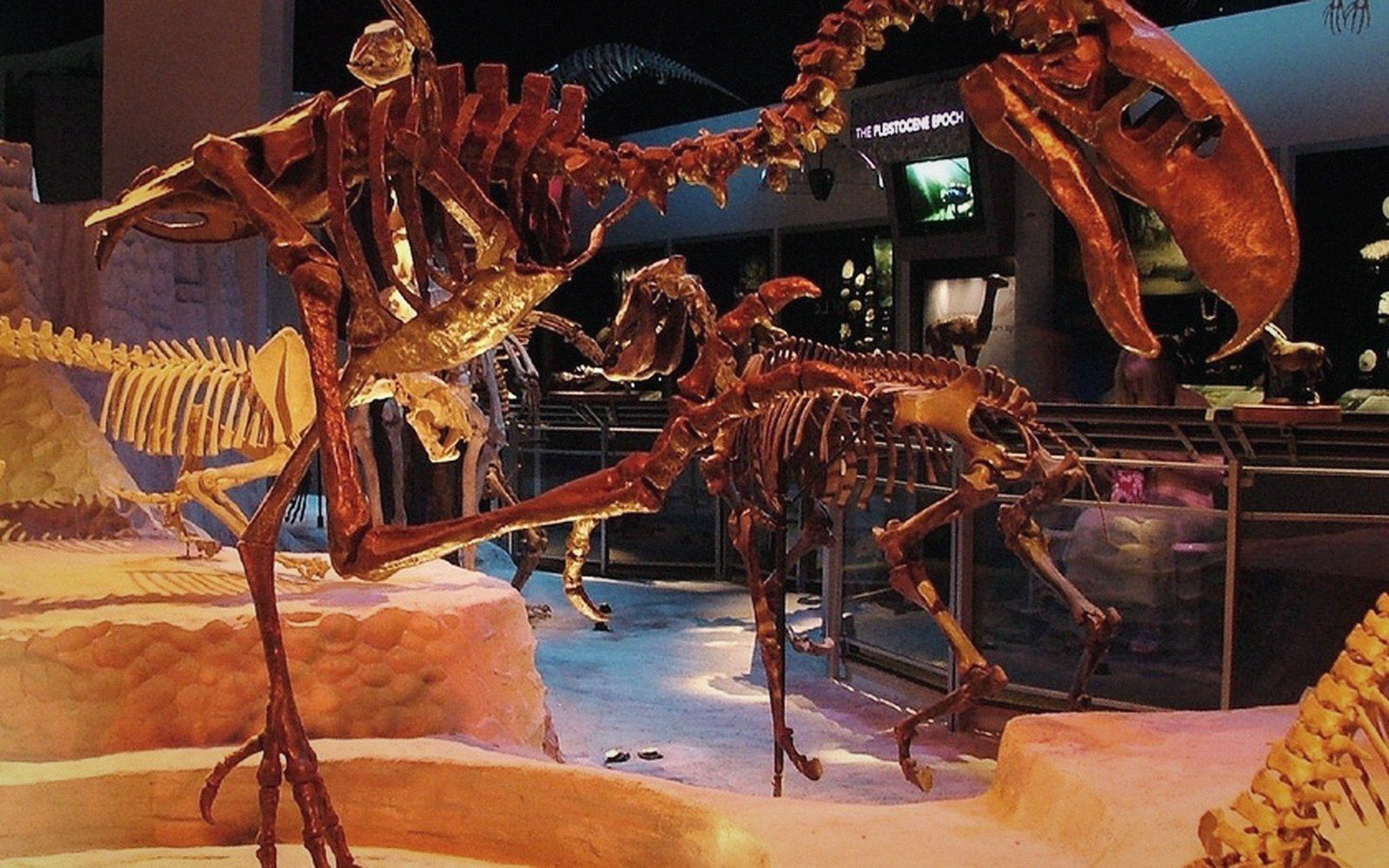
Seasonal change adds another layer. Many species carry two coats: the dense winter pelage and the sleeker summer one, often different in colour as well as texture. Arctic hares and stoats undergo dramatic moults in spring and autumn, and during those moults the animal carries patches of both coats simultaneously, often in irregular but not random patterns. A painted animal frozen in one coat or the other is a statement about season and condition. A painted animal with no coherent pelage direction at all is a statement about the artist's source material.
The face requires separate attention. The fur around the muzzle of a wolf or a fox is short and close, the vibrissae (whiskers) project from distinct follicle pads, and the transition from face fur to longer ruff fur happens at a specific anatomical boundary. Around the eye, the fur typically radiates from the orbital margin, and this radial pattern, even when the individual hairs are too fine to show, determines the apparent shape of the eye socket in the finished painting. Get this wrong and the eye sits on the surface of the face rather than inside the head.
What the mark itself says
None of this is separable from the question of how the mark is made. A brushstroke that follows feather direction does double duty: it describes the surface and it constructs the form beneath the surface simultaneously. A brushstroke that runs across feather direction can still describe colour accurately while destroying the sense of the underlying body — a common failure in otherwise technically accomplished work. In watercolour particularly, where the marks cannot be substantially corrected, the direction of each stroke is a decision made once and read forever. The discipline of watercolour and the single chance applies to pelage and plumage before it applies to anything else.
In sculpture — bronze, in particular — these questions manifest differently but no less urgently. The animalier working in wax before casting must indicate pelage direction through the texture of the modelled surface. Because there is no colour, every read of species, condition and even season comes through exactly this: the direction, the depth, and the apparent density of the marks in the surface. A well-modelled big cat looks tightly furred on the flank and slightly looser at the elbow and knee; the follicle tracts have been followed even if no individual hair is rendered.
The honest summary is that an artist who has never looked systematically at the underlying order — the pterylography of the bird, the pelage currents of the mammal — will produce surfaces that convince only the viewer who has not looked either. The convincing animal painting is the one in which the surface is a consequence of structure, not an addition to it. The marks that make plumage or pelage go with the grain of growth, part at the right ridges, thicken at the right anatomical margins, and thin where the animal's own form demands it. When those things are right, the viewer does not notice them. When they are wrong, the viewer feels, without necessarily knowing why, that the animal is not quite real.